The Benefits of Clinical Pilates for Injury Recovery: Building Strength, Stability and Confidence
by
Georgia White
The Benefits of Clinical Pilates for Injury Recovery: Building Strength, Stability and Confidence
Recovering from an injury is about more than simply reducing pain. It is about rebuilding strength, restoring movement, improving stability and helping the body return to the activities of everyday life with confidence.
Clinical Pilates is an excellent tool in the rehabilitation process, offering a gentle yet highly effective approach to targeted strengthening.
Building strength where it matters
One of the key benefits of Clinical Pilates is its focus on strengthening the muscles that support and stabilise the body. Particular attention is given to the deep core muscles, trunk, pelvic floor, gluteal muscles and postural muscles.
These muscle groups work together to support the spine, stabilise the pelvis, improve alignment and distribute loads more effectively throughout the body. When these muscles are weak or not functioning optimally, other structures may be forced to compensate, potentially contributing to discomfort, poor movement patterns and recurring injuries.
Through carefully selected and individually tailored exercises, Pilates helps improve muscular strength, endurance, coordination and postural control. This is particularly beneficial for people experiencing chronic or recurring spinal pain, inflammatory joint pain, or any injury that require a gradual and targeted return to functional movement.
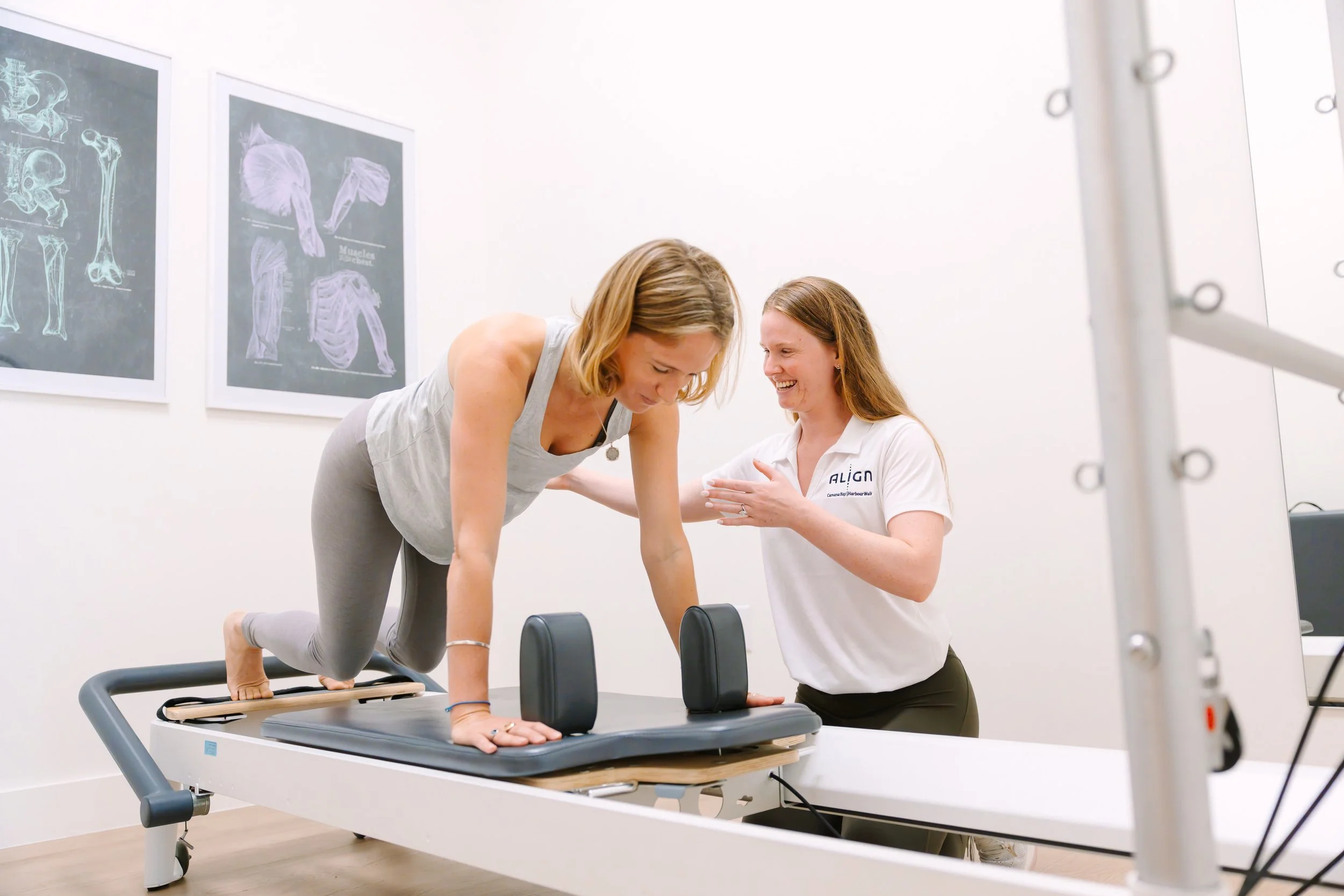
A gentle approach to strengthening with the Reformer
One of the greatest advantages of Reformer Pilates is its versatility. The spring resistance, adjustable positioning and wide variety of exercise modifications allow movements to be adapted to suit each individual's needs and physical limitations.
This means exercises can be modified to ensure strengthening takes place within a comfortable, pain-free range of movement, without placing unnecessary stress on sensitive joints or injured tissues.
For someone recovering from an injury or experiencing pain, this adaptability is particularly valuable. Resistance can be adjusted, movement ranges reduced and exercises supported or progressed as strength and confidence improve.
The goal is not to push through pain, but to build strength progressively, safely and effectively.
Restoring confidence in movement
Injury and persistent pain can often lead to reduced activity, muscle weakness and a loss of confidence in the body's ability to move. Clinical Pilates provides a controlled environment in which individuals can gradually reintroduce movement, improve body awareness and develop better movement strategies.
As strength, stability and control improve, everyday activities such as walking, lifting, bending, climbing stairs and returning to exercise can become more manageable.
Ultimately, recovery is not just about getting out of pain. It is about building a stronger, more resilient body that is better equipped to support you in everyday life.