
Expanding My Scoliosis Treatment Expertise: SEAS Course in Lima, Peru
by
Henrietta Restrepo Andrejski
Expanding My Scoliosis Treatment
Expertise: SEAS Course in Lima, Peru
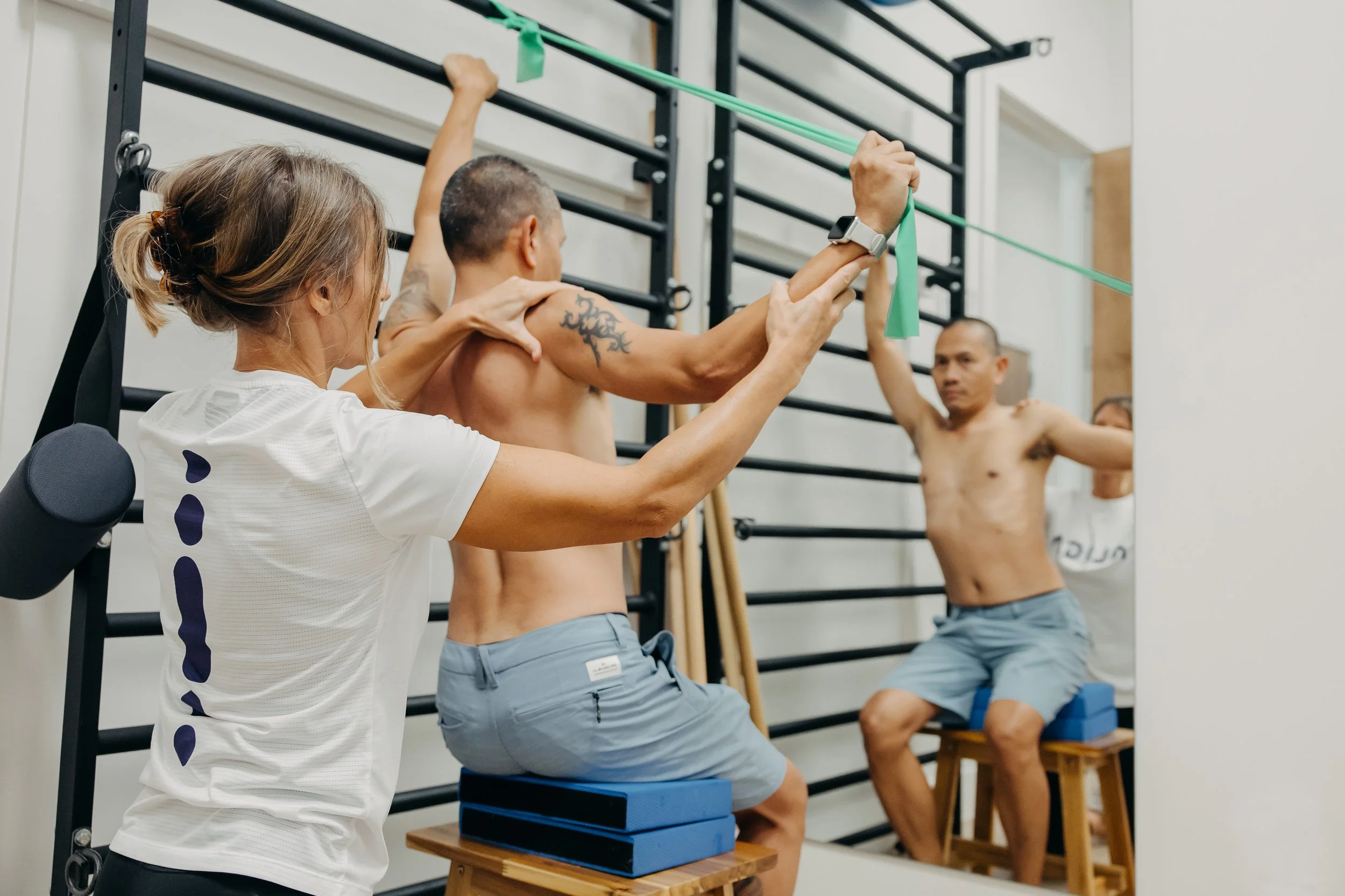
17–19 October 2026 | Lima, Peru
From 17–19 October, I had the opportunity to attend a three-day course in Lima, Peru, focusing on the SEAS (Scientific Exercises Approach to Scoliosis) method — an evidence-based approach to the conservative management of scoliosis developed in Italy.
As a physiotherapist already trained in the Schroth Method, I believe that continuing to explore different scoliosis-specific exercise approaches is essential to providing individualised, effective treatment for my patients.
What is the SEAS Method?
SEAS is a scientifically developed approach to scoliosis rehabilitation that focuses on active three-dimensional self-correction, spinal stability, neuromuscular control and functional movement.
Unlike approaches that primarily practise correction in specific therapeutic positions, SEAS places particular emphasis on teaching patients to maintain their corrected spinal alignment while performing increasingly challenging movements.
The ultimate goal is to help patients develop better automatic postural control, allowing them to integrate their corrections into everyday activities rather than relying solely on supervised exercise sessions.
What Are the Main Objectives of SEAS?
The SEAS approach focuses on several important therapeutic objectives:
Improve spinal stability: Develop the neuromuscular ability to maintain a more corrected spinal alignment and help reduce the risk of curve progression.
Develop active 3D self-correction: Teach patients to independently correct their spinal alignment in the frontal, sagittal and transverse planes.
Improve motor control and coordination: Challenge the patient’s ability to maintain self-correction during balance, strengthening and functional exercises.
Integrate correction into daily life: Encourage patients to maintain better spinal control during everyday movements and activities.
Promote patient independence: Provide individualised exercise programmes that patients can practise confidently at home, supporting long-term treatment adherence.
How Does SEAS Complement Schroth Therapy?
One of the most valuable aspects of attending this course was discovering how SEAS can expand my existing knowledge of Schroth therapy.
Both methods share the fundamental principle of three-dimensional spinal correction, but they approach exercise progression and motor learning somewhat differently.
Schroth therapy provides a highly structured approach to curve-specific correction, postural awareness, muscle activation and rotational angular breathing.
SEAS adds a particularly strong emphasis on dynamic spinal stability, functional challenges and automatic neuromuscular control.
For example, once a patient has learned an appropriate correction through Schroth therapy, SEAS principles can provide additional ways to challenge their ability to maintain that correction during balance exercises, resistance training and everyday functional movements.
This does not mean one method is superior to the other. Rather, understanding both approaches gives me a broader range of clinical tools to adapt rehabilitation to each patient’s needs, abilities and stage of treatment.
Bringing New Knowledge Into Clinical Practice
Attending the SEAS course in Lima was another valuable step in my ongoing professional development in scoliosis rehabilitation.
It reinforced the importance of looking beyond the spinal curve itself and considering how patients move, stabilise their spine and maintain postural control in everyday life.
My goal is not simply to teach patients how to correct their posture during an exercise session, but to help them develop the strength, awareness, coordination and confidence to use that correction in daily life.
By combining my existing Schroth knowledge with the principles learned through SEAS, I aim to continue developing a more comprehensive, evidence-informed and individualised approach to scoliosis rehabilitation.
Because successful scoliosis management is not only about achieving correction — it is also about learning how to maintain and use it in everyday life.
